
Lore
Your lore is the building blocks of your campaign. You can use these to indicate an area as large as an entire continent or an object as small as a mouse in castle. Information about Lore include a name, the text you might read aloud to your players when they first encounter it, as well as what other Lore might be associated with it. Lore by default in Lore Link is broken down into the following Categories: Locations, Events, NPCs, Villains, Items, and Transportation. Note that Galaxy and above users can add additional categories or even change the names of existing ones!
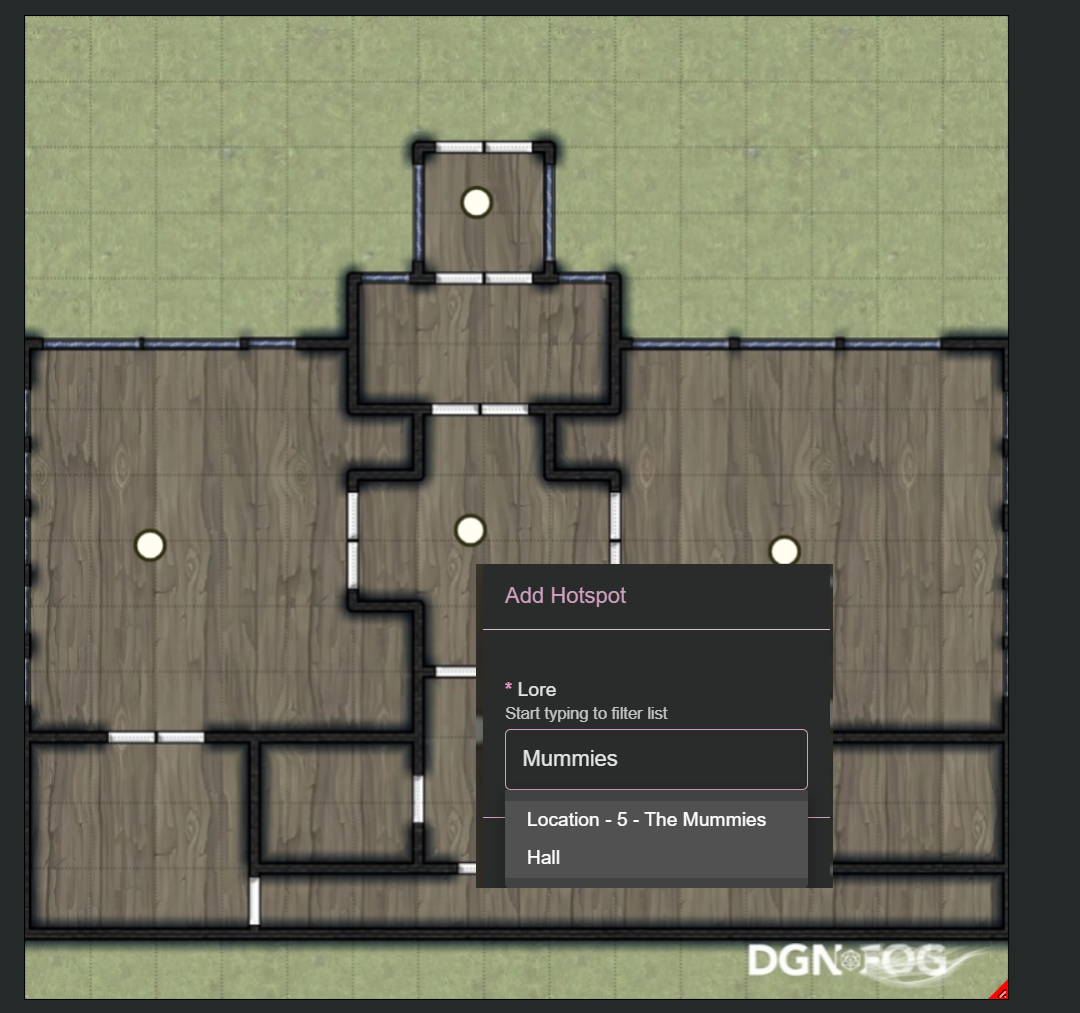
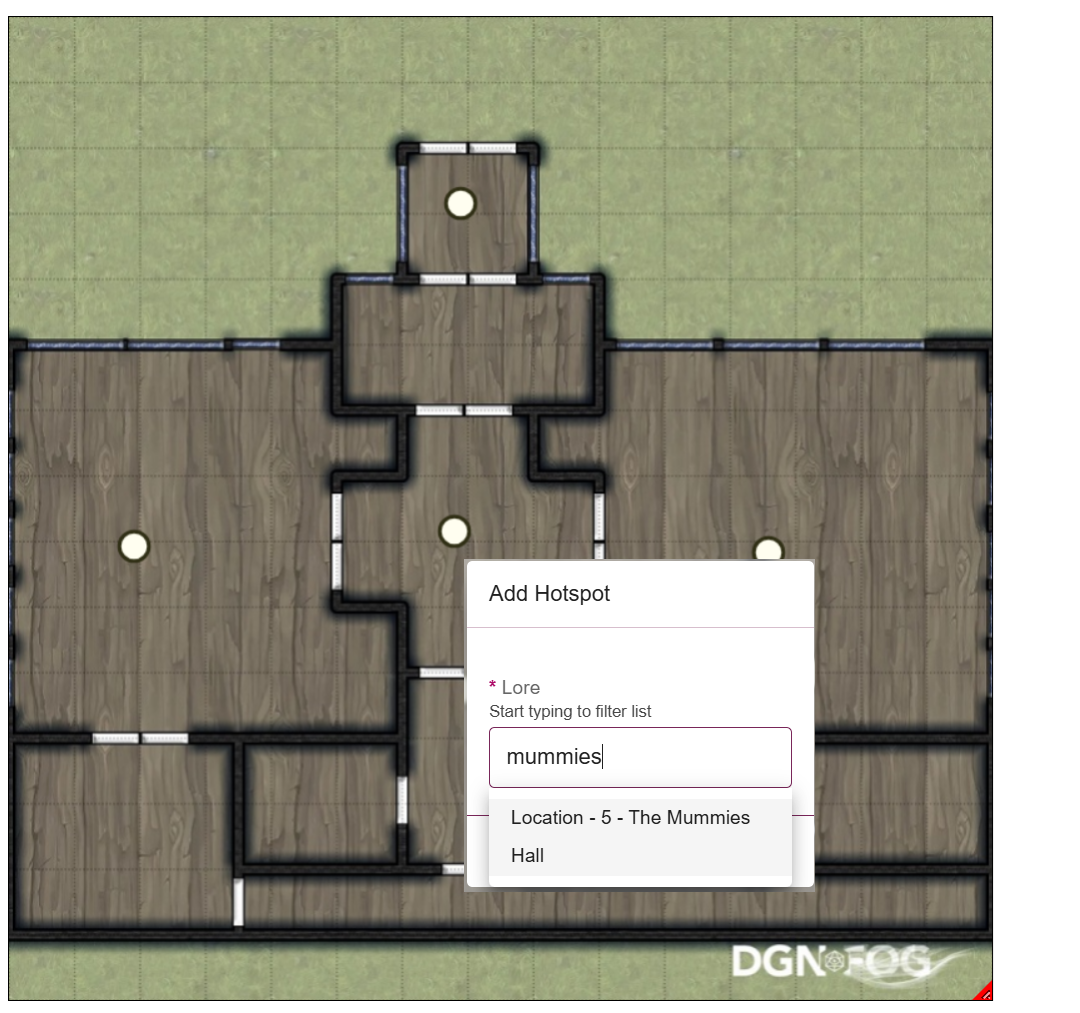
Another great feature for Galaxy and above users is Hotspotting on an Image Map. In addition to having an image you can use for a glimpse of how the item looks, you can also have an Image Map on any piece of Lore. You can use this to quickly jump from this piece of Lore to any other piece of Lore. Use it to store a map, and label all of the rooms for quick reference while your team crawls the dungeon. Or use it to individually an image of loot inside chest, family members in a family tree.
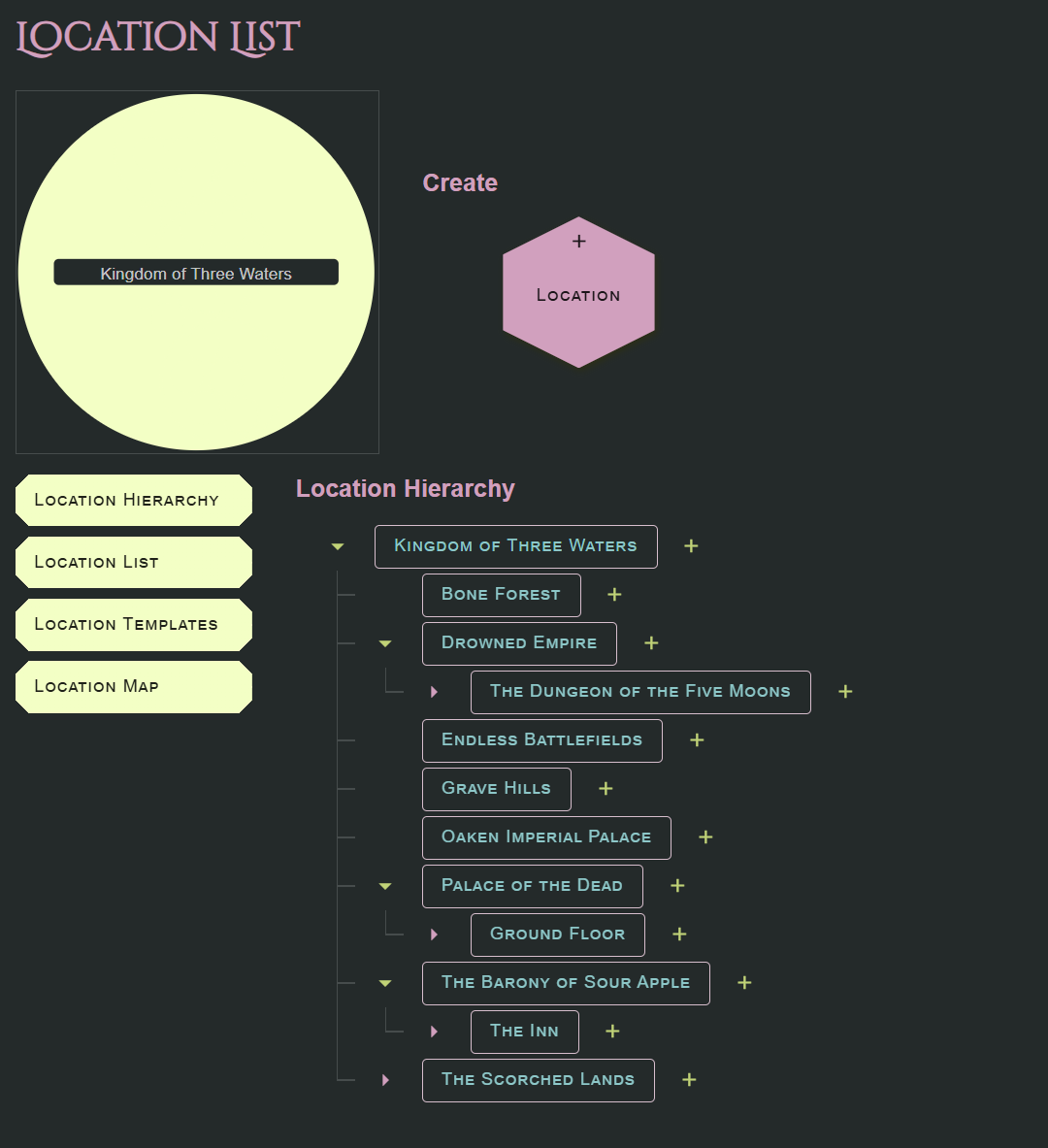
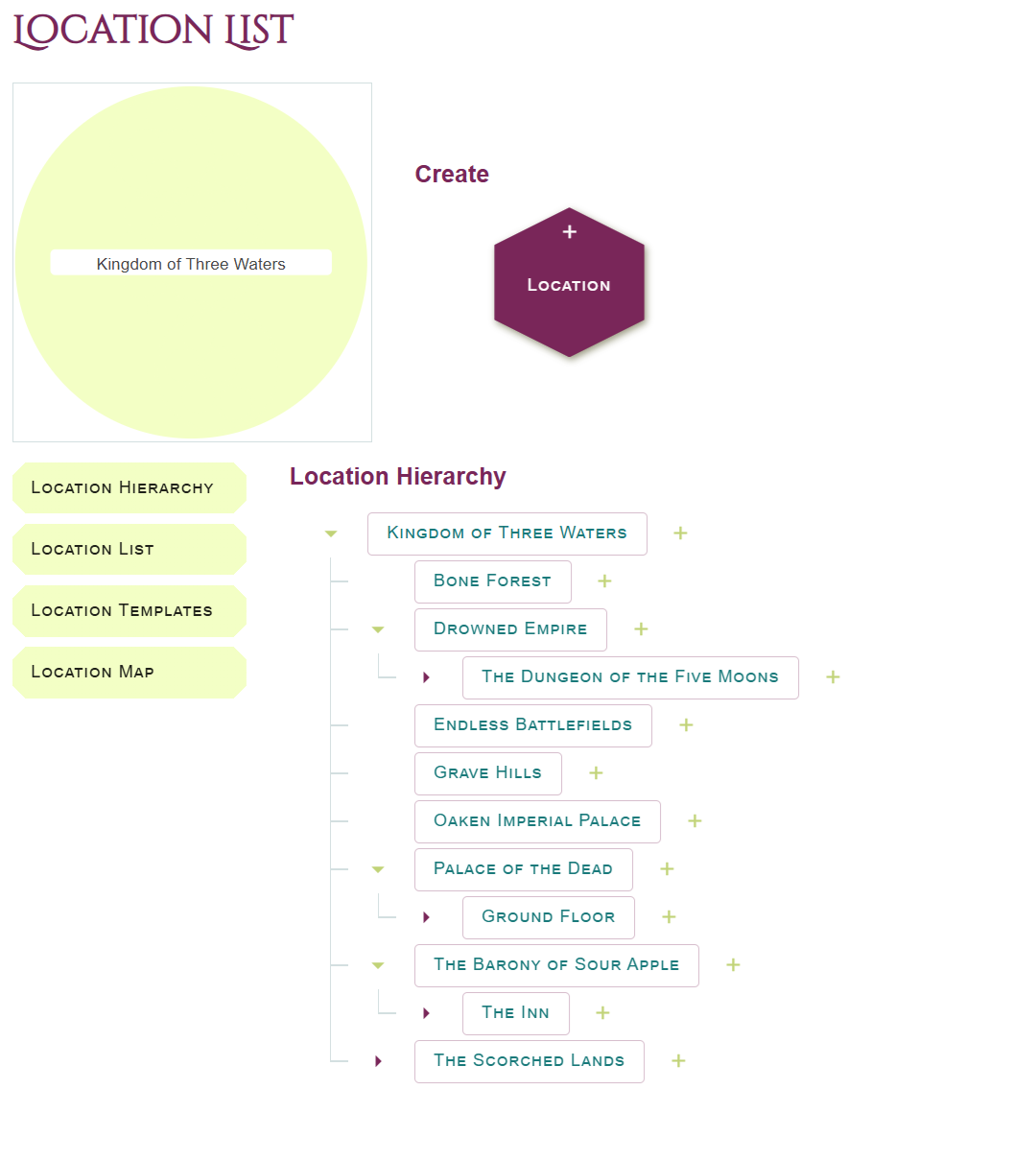
It is important to note that Lore in Lore Link is built in a tree structure, with each piece of Lore having only one parent, with zero or more children. This allows you to provide information that chains down from broader pieces of Lore to more specific pieces of Lore. Common examples where you would use this are creating overall information about a group of related Lore. Like a planet where gravity is halved, the motives for all members of a crime family, similar properties for a group of items or just a common description for a level of a dungeon (walls are made of stone and are 10 ft, lit only by torches every 10 feet). Building these parent / child relationships can save you from having to leave the current piece of Lore to look up the information, or copying and pasting the information everywhere. Do note that parent / child relationships are one way, meaning that child Lore cannot end up being the parent to any Lore above it.
If you want to create relationships between Lore that are more flexible but don’t chain information, you can instead associate Lore with other Lore. This format allows you to link Lore via a two way relationship for ease of reference. Maybe this room is occupied by a particular creature, NPCs are related to one another, or a master craftsperson forged this item.